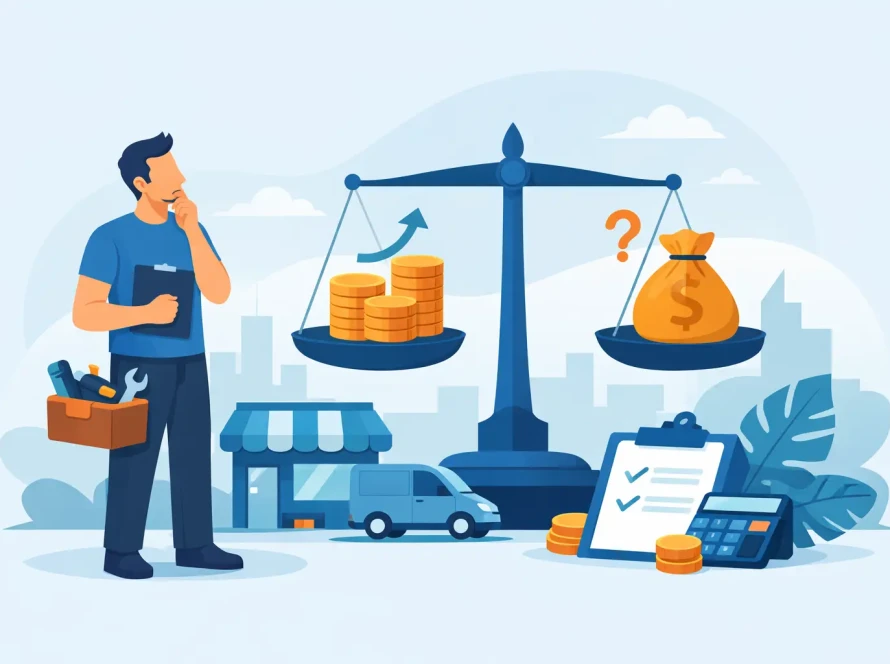
Choosing a structure can feel like a decision you need to get perfect before you earn your first dollar. In reality, a business structure comparison is about choosing an arrangement that suits your current risks, income, ownership plans and administrative capacity, while leaving room to change as the business grows. The right answer for a Perth consultant, a family retail business and a growing professional practice may be very different.
Your business structure affects more than your tax return. It influences who is legally responsible for debts, how profits are taxed, what records you need to keep, how you pay yourself, and the work involved in meeting ATO and ASIC obligations. A clear decision at the beginning can reduce stress later, but it should be based on practical circumstances rather than a one-size-fits-all rule.
Business structure comparison: the four common options
Most Australian small businesses operate as a sole trader, partnership, company or trust. Each structure has benefits and limitations. Tax is a significant consideration, but it should not be the only one. Asset protection, business risk, expected profit, succession plans and compliance costs all deserve attention.
Sole trader
A sole trader is the simplest structure. One person runs the business, reports the business income in their individual tax return and pays tax at their marginal income tax rate. Many freelancers, tradespeople, consultants and first-time business owners begin this way because it is straightforward to establish and administer.
The main advantage is simplicity. There is generally less paperwork than a company or trust, and you have direct control over business decisions and income. If the business is registered for GST, you will still need to lodge BAS statements and maintain accurate records, but the ongoing structure itself is relatively uncomplicated.
The trade-off is that you and the business are not separate legal entities. In many circumstances, you are personally responsible for business debts and claims. That exposure matters more where the work involves contracts, employees, stock, premises, vehicles or a higher likelihood of customer claims. A sole trader also cannot split business profits with a spouse or retain profits in the business at a separate company tax rate.
Partnership
A partnership may suit two or more people operating a business together. Partners share income, responsibilities and, usually, decision-making according to the partnership agreement. The partnership lodges its own tax return, but it does not generally pay income tax. Instead, each partner declares their share of the partnership income in their own return.
Partnerships can be practical where the owners want a relatively simple arrangement without forming a company. However, the relationship between partners needs careful attention. Partners may be jointly responsible for partnership debts and obligations, which means one partner’s decisions can affect the other.
A well-prepared partnership agreement is valuable. It should address profit sharing, authority to make decisions, what happens if a partner wants to leave, and how disagreements will be handled. Without these arrangements, a workable business relationship can become difficult when circumstances change.
Company
A company is a separate legal entity. It can enter contracts, own assets, employ staff and earn income in its own name. The company is managed by directors and owned by shareholders, who may be the same people in a small business.
For many operators, the key attraction is that a company generally provides a clearer separation between personal and business affairs. This can help manage commercial risk, although it is not absolute protection. Directors still have legal duties, and personal guarantees, unpaid tax obligations or improper conduct can create personal exposure.
Companies can also offer more flexibility around retaining profits for business needs, subject to tax rules. This may be helpful where a business needs working capital for equipment, stock, staff or expansion. However, money held by the company is not automatically the director’s personal money. Taking funds from the company requires proper treatment through wages, dividends, reimbursements or other valid arrangements.
The administration is greater than for a sole trader. A company needs its own tax return, financial records, ASIC obligations and careful management of director and shareholder transactions. Payroll, superannuation, GST and BAS responsibilities can also become more involved as the business employs people.
Trust
A trust is an arrangement where a trustee holds and manages assets or income for beneficiaries. The trustee may be an individual or a company, often called a corporate trustee. Family or discretionary trusts are commonly used by family-owned businesses and investment structures, while unit trusts may suit businesses with investors who hold defined units.
A trust can provide flexibility in distributing income among eligible beneficiaries, but that flexibility is governed by the trust deed and tax law. It is not a simple way to reduce tax, and annual distribution decisions need to be made correctly and on time. Income that is not dealt with appropriately can lead to unexpected tax outcomes.
Trusts also involve additional administration. The deed must be understood and followed, records need to support trustee decisions, and the trustee has legal responsibilities. Using a corporate trustee can strengthen the separation between the trust’s affairs and an individual’s personal affairs, but it adds another entity to manage.
The factors that matter beyond tax
A useful business structure comparison starts with the questions that affect day-to-day operation. How much financial risk does the business carry? Will you have employees, borrow money, sign a lease or provide advice that could lead to a claim? Are there multiple owners? Do you expect profits to be modest at first, or is growth likely?
For example, a sole trader may be appropriate for a low-risk independent contractor with limited expenses and no staff. A business taking on major contracts, employing a team or holding valuable equipment may need to give greater weight to risk management and asset protection. Appropriate insurance remains important regardless of the structure you choose.
Ownership and succession also matter. A company can make it easier to bring in investors or transfer ownership through shares. A partnership may work well between active owners but can become complicated if one person exits. A trust may support family wealth planning in the right circumstances, but it needs careful administration and professional advice.
The cost and time involved should be considered honestly. A more complex structure may offer useful benefits, but only if you can meet the recordkeeping, reporting and governance requirements. Poor administration can remove much of the benefit and create avoidable compliance pressure.
Tax and cash flow need separate attention
It is common to hear that a company or trust is automatically more tax-effective than operating as a sole trader. That is not always the case. The outcome depends on taxable income, other personal income, how profits are used, available beneficiaries, deductions, losses, Division 7A considerations and the rules that apply to your business activity.
A company tax rate does not mean all business earnings can be withdrawn personally at that rate. When profits are paid to shareholders, further tax consequences may apply. Similarly, trust distributions must be made within the terms of the deed and cannot simply be directed wherever the lowest tax rate appears.
Cash flow is often more immediate than tax planning. GST, PAYG withholding, superannuation and income tax instalments must be funded as they fall due. Whichever structure you select, regular bookkeeping and clear separation of business and personal spending make it easier to understand what the business can afford.
When should you review your structure?
There is no requirement to change structure simply because the business has had a good year. But a review is sensible when your circumstances shift. Common triggers include taking on employees, entering larger contracts, buying property or equipment, adding an owner, increasing profits, expanding interstate, or planning for a sale or succession.
Changing structures can have tax, duty, legal and administrative consequences. Assets, contracts, registrations, finance arrangements and employees may need to be transferred or updated. For that reason, it is usually better to plan a change before a major transaction rather than react after it.
Get advice that fits the business you are building
The best structure is not necessarily the most complex one. It is the one that reflects how your business earns income, the risks you accept, who is involved and the obligations you can manage consistently. A registered tax agent can help you compare likely tax and compliance outcomes, while legal advice may be needed for asset protection, partnership agreements, trust deeds and contractual issues.
At Hire An Accountant, we help business owners turn structure decisions into practical next steps, including bookkeeping, BAS, payroll and tax planning considerations. A short discussion before you commit can bring clarity to a decision that will shape how confidently you run the business.